The Ecological Importance of Winged Sumac: A Versatile Plant of the Southeastern U.S.
Role as a Host Plant
While not a primary host for most Lepidoptera species, Winged Sumac does serve as a host for the Red-banded Hairstreak butterfly (Calycopis cecrops). Certain moth species might also use Shiny Sumac as a host plant, although it is not their first choice.

Nutritional and Chemical Profile
Nutritional Benefits
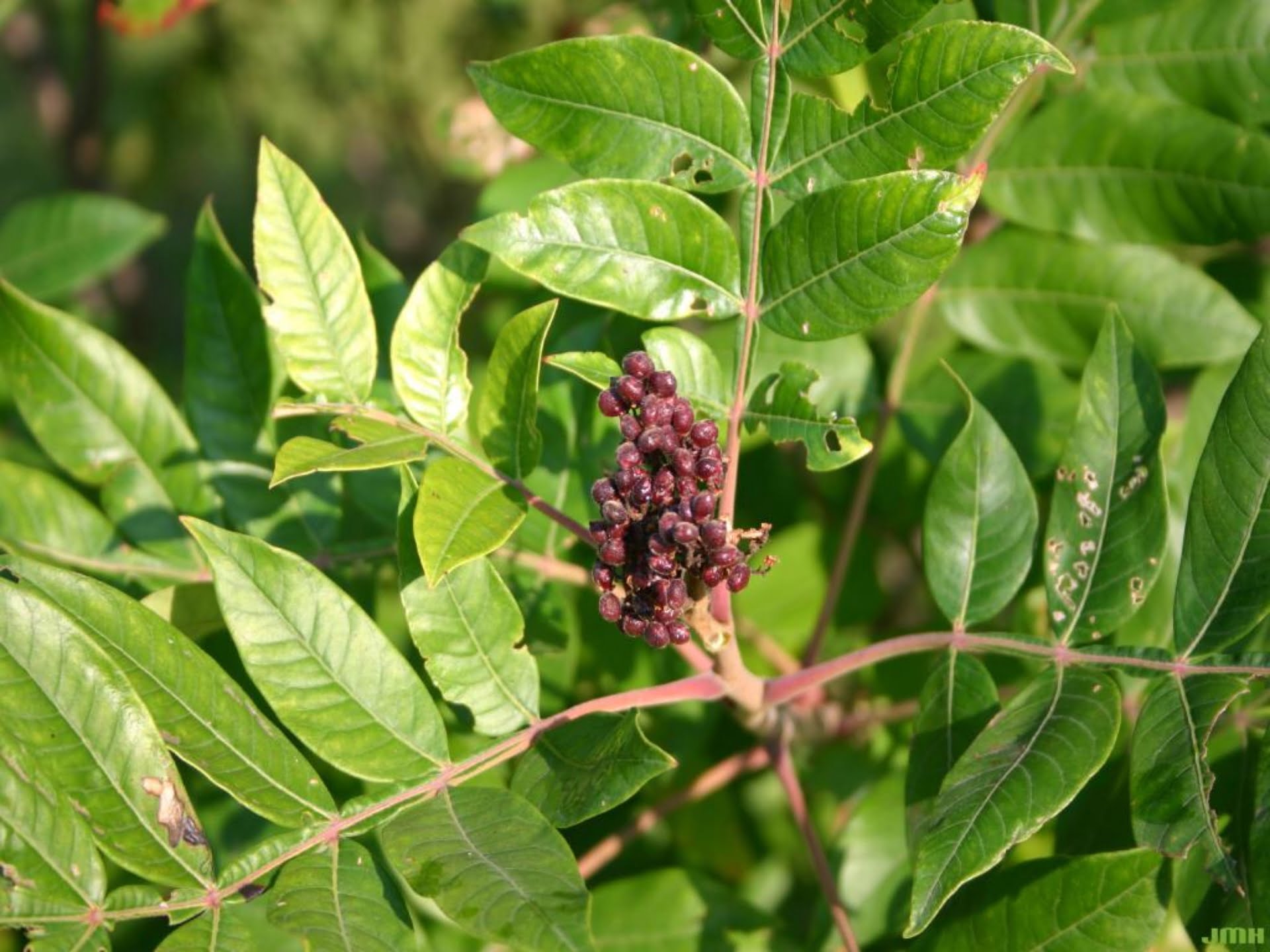
The drupes of Shiny Sumac are rich in Vitamin C, antioxidants, fiber, and essential minerals like potassium, calcium, and magnesium. These nutrients make the fruits a valuable food source for various bird species and some mammals.

Secondary Chemicals
Shiny Sumac contains secondary metabolites like tannins, flavonoids, and phenolic acids. These compounds serve to protect the plant from herbivores and microbial infections. Some insects that feed on Shiny Sumac may even utilize these chemicals as a form of defense against their predators.
Conclusion
Shiny Sumac is an ecological gem of the southeastern United States. Its versatility, ability to provide food and shelter, and role as a host plant make it a vital part of the region’s biodiversity. Whether you’re a naturalist, a gardener, or just someone interested in native plants, Shiny Sumac offers a fascinating glimpse into the complex web of life in southeastern ecosystems… one day at a time!