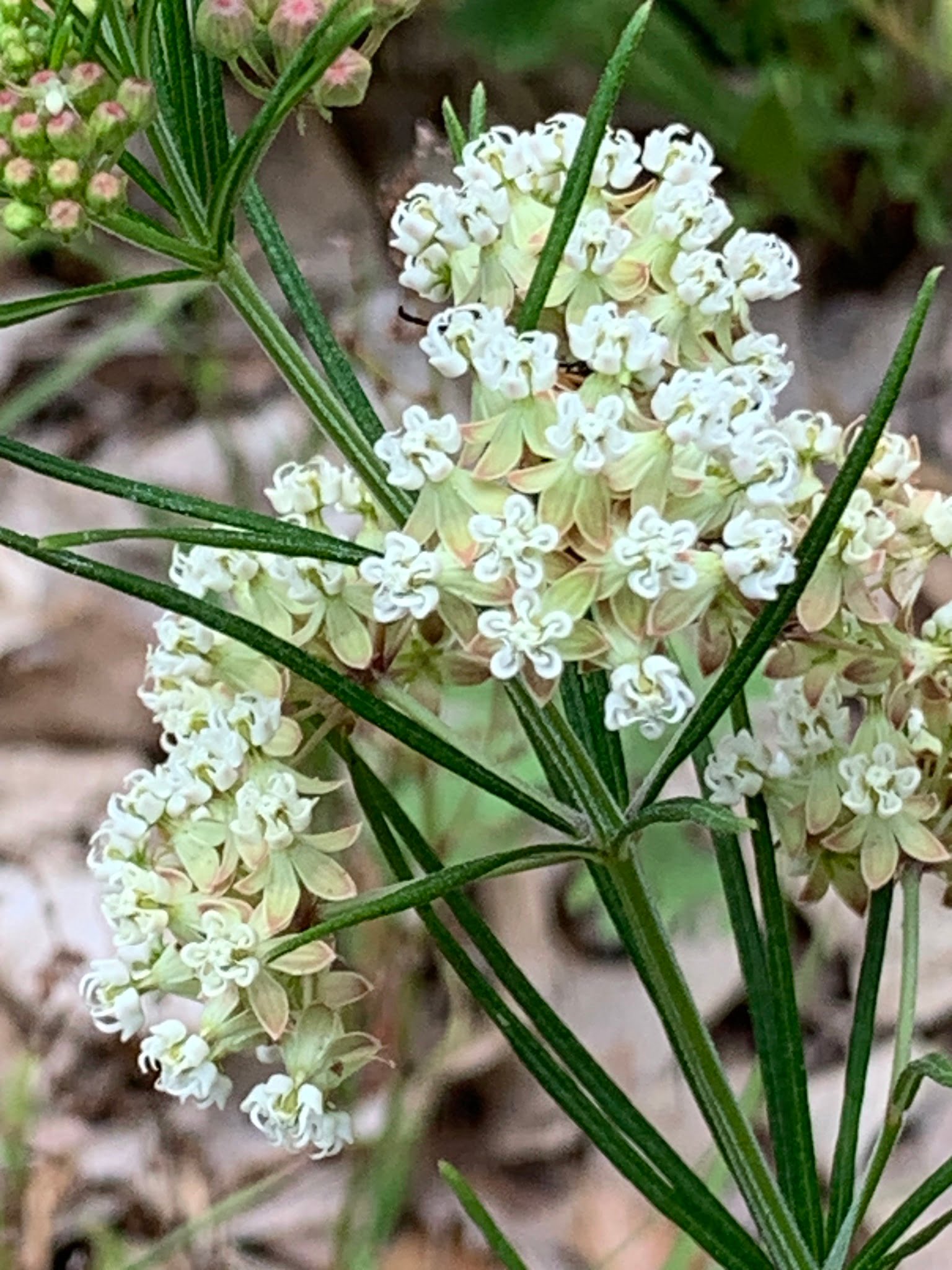
50 Whorled Milkweed Seeds (Asclepias Verticillata)
$5.00
This plant is perfect for gardeners who are committed to creating a haven for Monarchs. Its late-season blooming period ensures that Monarchs have the resources they need as they prepare for migration. When you plant Whorled Milkweed, you’re not just adding beauty to your garden—you’re playing a vital role in the conservation of this iconic species. 25 Seeds. USDA Zones 3-10.
7 in stock
Description
Johnny Butterflyseed Whorled Milkweed Seeds – 25 Count
Product Description:
Elevate your Monarch Waystation with Johnny Butterflyseed’s premium Whorled Milkweed (Asclepias verticillata) seeds, sourced from the heartland of Iowa. These seeds boast an impressive 99% germination rate, ensuring that your garden will be filled with this vital late-season milkweed, perfect for supporting Monarch butterflies throughout their lifecycle.
Key Features:
– High Germination Rate: Each packet contains 25 seeds with a remarkable 99% germination rate, providing you with robust, healthy plants.
– Cold Stratification Recommended: For best results, we recommend cold stratification before sowing. This process mimics the natural winter conditions the seeds would experience in the wild, increasing germination success.
– Planting Instructions: Sow seeds 1/4″ deep in well-draining soil. Whorled Milkweed thrives in its natural environment, but it’s essential to avoid shallow containers or frequent transplanting, as this plant prefers stability.
– Latex Warning: Like other milkweeds, Whorled Milkweed contains a milky latex that is toxic to mammals. Handle with care, and be mindful when planting in areas frequented by pets or livestock.
– Monarch Waystation Essential: Whorled Milkweed is a fantastic addition to a balanced Monarch Waystation. This late-season bloomer rounds out your garden, especially when paired with at least two other types of milkweed, providing Monarchs with a diverse habitat.
Native Range:
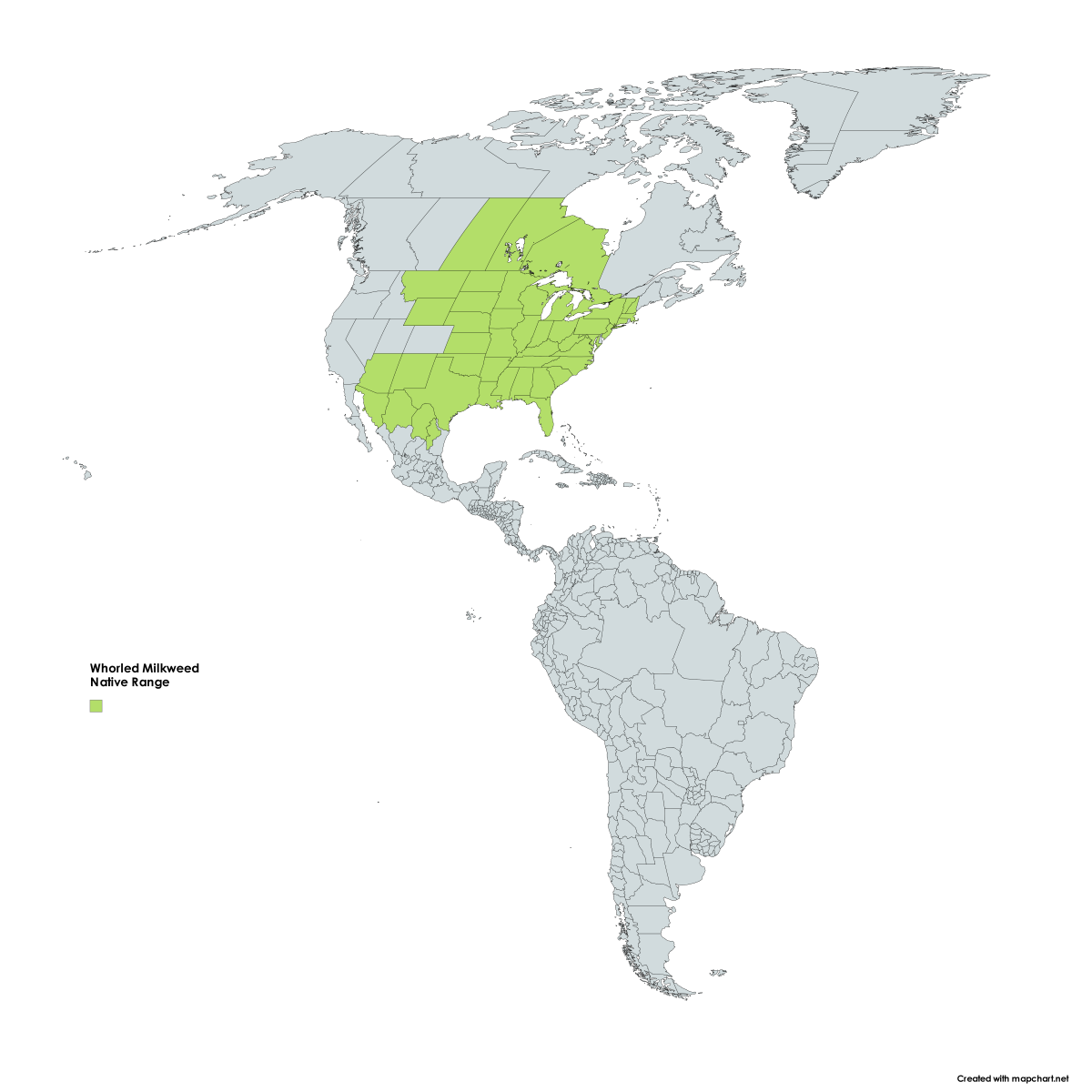
Whorled Milkweed is native to a broad region of central and eastern North America, including states from Massachusetts to Ontario and Saskatchewan, and extending southward to Arizona, Northeastern Mexico, and Florida. Its adaptability to diverse habitats like dry prairies, open woods, and roadsides makes it a resilient and essential component of native plant gardens, especially in USDA Zones 3 through 10.
Germination Instructions:
1. Cold Stratification: To break seed dormancy, cold stratify the seeds for 30 days before planting. Place seeds in a moist paper towel, seal in a plastic bag, and store in the refrigerator.
2. Sowing Depth: After stratification, sow the seeds 1/4″ deep in well-draining soil.
3. Watering: Keep the soil consistently moist until germination, which typically occurs within 2-3 weeks.
4. Transplanting: Whorled Milkweed does not transplant well due to its deep root system. Sow directly into its final location or use biodegradable pots if starting indoors.
Why Choose Whorled Milkweed?
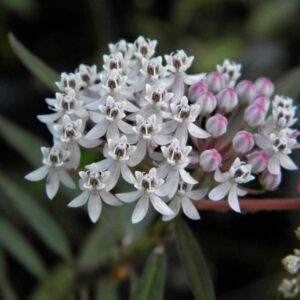
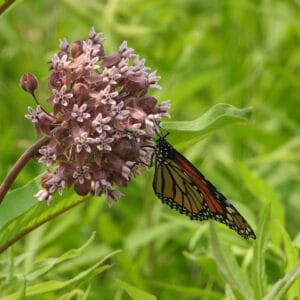
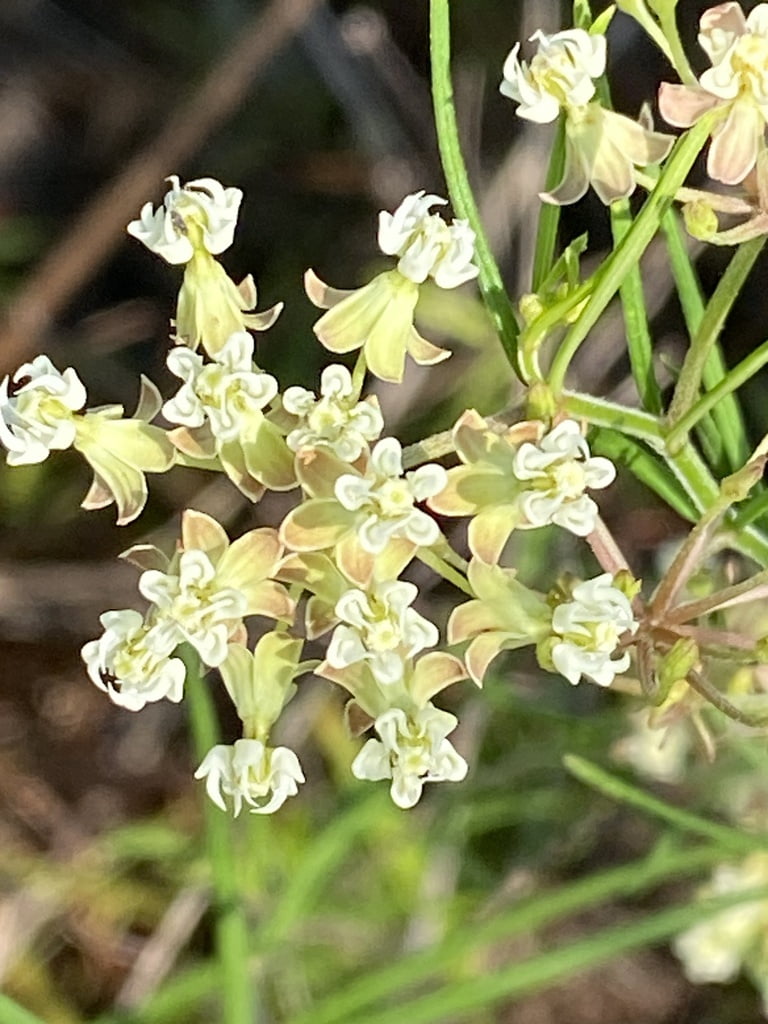
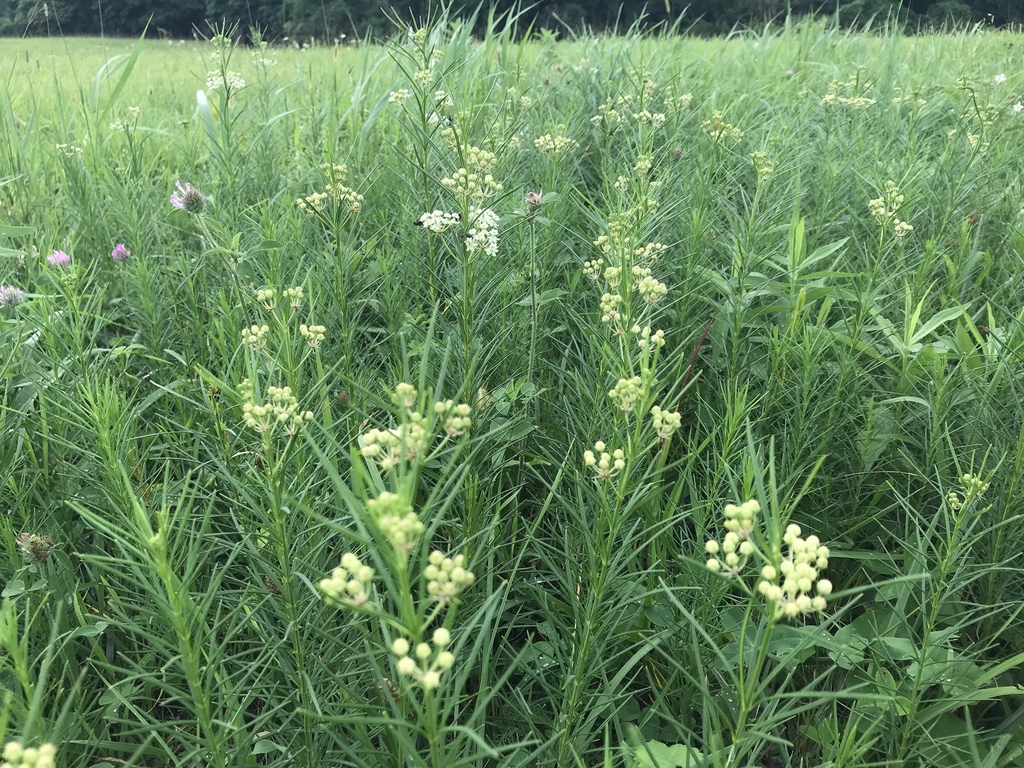
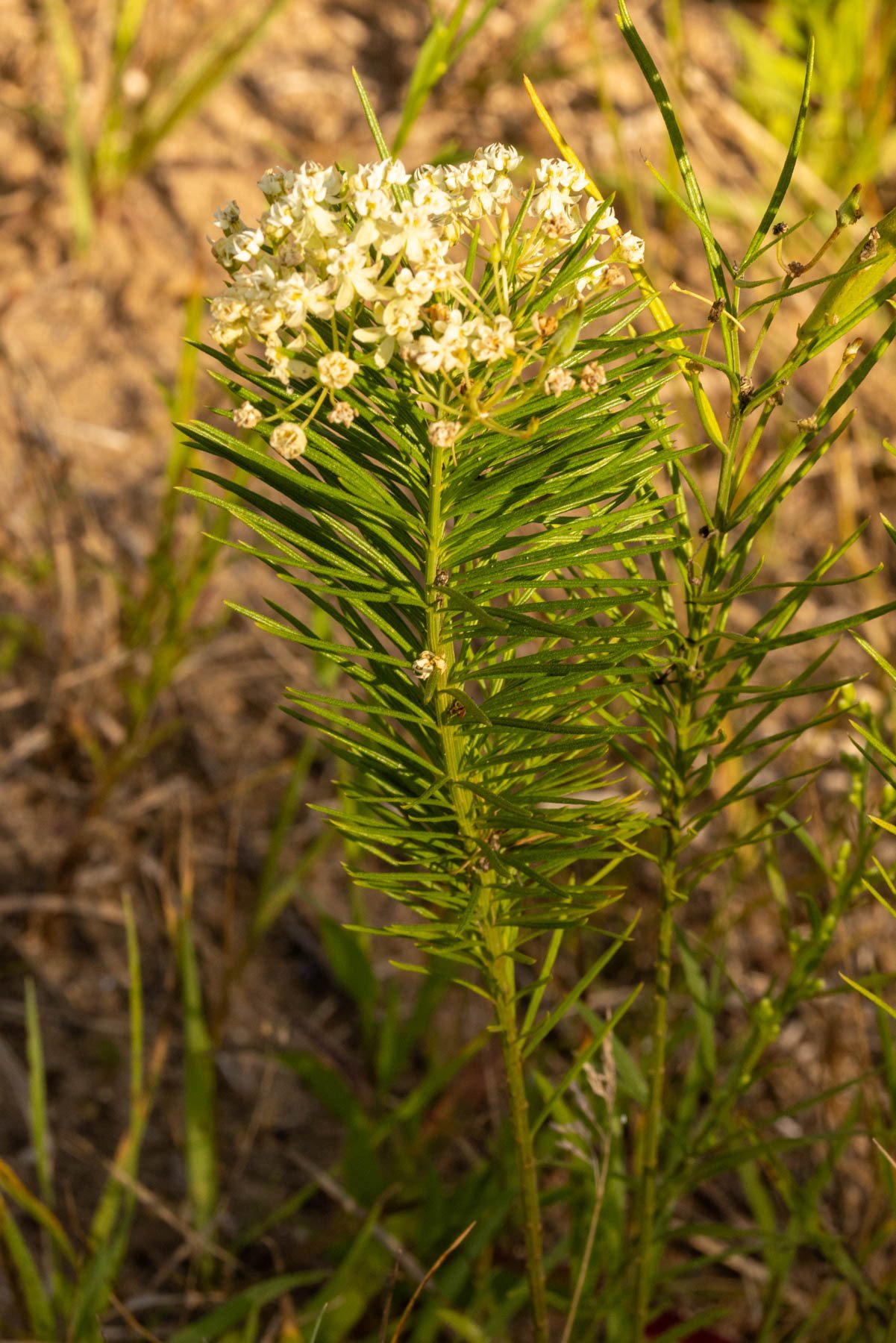
Whorled Milkweed is an upright perennial that stands out for its unique appearance and ecological importance. It typically grows to about 2.5 feet tall, with narrow, needle-like leaves arranged in whorls along the stem. In late summer, it produces fragrant clusters of greenish-white flowers, offering nectar to adult butterflies while serving as a host plant for Monarch caterpillars.
This plant is perfect for gardeners who are committed to creating a haven for Monarchs. Its late-season blooming period ensures that Monarchs have the resources they need as they prepare for migration. When you plant Whorled Milkweed, you’re not just adding beauty to your garden—you’re playing a vital role in the conservation of this iconic species.
Caution:
Due to its toxic latex, Whorled Milkweed should be planted with care, especially in areas accessible to pets and livestock.
Add Johnny Butterflyseed’s Whorled Milkweed seeds to your cart today and take a step towards creating a thriving, balanced habitat for Monarch butterflies!
You may also like…

Related products
-

50 Aquatic Milkweed Seeds (Asclepias perennis) White Swamp Milkweed for U.S. Southeast and Midwest
$5.00 Add to cart -
UnCommon Milkweed Seeds (Asclepias Syriaca) for North America
$5.00 Add to cart -
20 Hairy Balls Milkweed Seeds (Asclepias physocarpa) for U.S. & Mexico
$5.00 Add to cart -
Butterfly Milkweed Seeds (Asclepias Tuberosa) for North America
$5.00 Add to cart